

Commercial Low-Voltage Lighting Design for MEP Engineers
Spec-ready systems, complete submittals, and coordination that holds up in the field. Bryte Light gives MEP engineers validated low-voltage lighting and controls — and a partner who answers the RFI before it gets written.
Schedule a ConsultationYour trusted source for intelligent lighting and controls—end-to-end solutions tailored to your needs.
Consultation & Design
Expert collaboration to seamlessly integrate intelligent lighting and controls into your plans and specifications.
We Already Speak Your Language
We were founded by leaders of the industries you work with every day: from lighting and control rep agencies, construction, and building automation.
Proven Innovation, Not Experiments
We only recommend technology we've validated in real-world projects. You're not our guinea pig—you're the innovator with backup.
Field Support
Our team brings decades of practical jobsite know-how resulting in smooth installation.
Cence at a Glance
3,000 W
From a Single AC Circuit
Up to 3,000 W of lighting load from one 176–277 V AC circuit, distributed as Class 2 power to fixtures, sensors, wall switches and touch screens. Wiring methods should be verified against the local code edition and AHJ.
32
Class 2 Output Channels
Hot-swappable four-channel power modules scale to 32 output channels, each up to 100 W / 2300 mA, controlled individually or in groups.
26
Stays in CSI Division 26
Cence installs in the electrical room or plenum, with schedules formatted like today's lighting control schedules — so the system stays inside the division you already specify.
Built for the Way You Already Engineer
Rethink the infrastructure behind the light. Bryte Light helps MEP teams evaluate commercial low-voltage lighting and controls early — then supports the drawings, budget, submittals, and field coordination needed to make the design buildable.
Stays in Division 26
Cence installs in the electrical room or plenum, with schedules formatted like today's lighting control schedules. The design tools are the ones you already use — CSI Division 26 specs, legend and symbols, fixture and panel schedule templates, and a voltage drop calculator. Specifier- and contractor-friendly.
Power and Control
Up to 3,000 W from a single 176–277 V AC circuit. Hot-swappable four-channel power modules scale to 32 channels at 100 W / 2300 mA each, controlled individually or in groups. Class 2 power at 12–58 V DC feeds fixtures, sensors, wall switches and touch screens.
Fixtures
Compatible with brands you likely already specify, with support for both constant current and constant voltage LEDs. Daisy-chain capable, with optional DC-to-DC drivers.
Mounting and Infrastructure
Mount directly to wall or structural framing using anchor bolts, screws or Unistrut. Power lands in the Cence Hub. No certified cable testing required, and Cence is low-voltage cable agnostic — twisted pair, 28 AWG to 12 AWG.
Cence Hub
What lands in the electrical room
Control and AC power come in at the hub. Thirty-two Class 2 low-voltage circuits go out to the fixtures.
Control inputs
- DALI command interface
- Art-Net DMX
- Dry contact (16)
- BACnet/IP
- 0–10 V
Power inputs
- 176–277 V AC — up to 3,000 W
- 48–58 V DC
Cence Hub
Installs in the electrical room or plenum. Hot-swappable four-channel power modules.
Power outputs
- 32 Class 2 low-voltage circuits
- Class 2 power, 12–58 V DC
- Up to 100 W / 2300 mA per output
- Constant current 0–2300 mA
- Constant voltage adjustable 24–48 V DC
- Constant voltage fixed 48–57 V DC
- Twisted pair, 28 AWG to 12 AWG
- Specifications from Bryte Light. Wiring methods should be verified against the local code edition and AHJ.
Cence vs. the alternatives
How DC lighting power compares to AC, PoE and drivers in a box
Lower installed cost, higher reliability, more power in less space and less energy lost than the three alternatives an MEP team would normally weigh.
| System | Cost-effective | Reliable | Power dense | Efficient |
|---|---|---|---|---|
| Cence | ✓ | ✓ | ✓ | ✓ |
| Line-voltage AC | ✗ | ✓1 | ✓ | ✗ |
| PoE lighting | ✗ | ✗ | ✗ | ✗2 |
| Drivers in a box | ✗ | ✗3 | ✗ | ✗ |
- 1 — Reliable wiring, fragile drivers. Every AC fixture hides one in the ceiling, where LED lighting fails most (U.S. DOE).
- 2 — Even when designed to the ANSI standard, PoE loses up to 5% of its power in the Ethernet cables alone, and that is only when runs average under 50 m (U.S. DOE / PNNL).
- 3 — A box moves the drivers but does not remove them: each one is still a separate failure point, packed together where heat builds up (U.S. DOE).
Lower installed cost. Higher reliability. More power in less space. Less energy lost.
Why look at it now?
The best time to simplify infrastructure is before it is drawn.
Once the AC lighting package is specified and priced, every change gets harder.
A clearer electrical scope can help teams confront schedule and material risk earlier.
MEP teams can lead the conversation with drawings, budgets, and a buildable alternate.
Send us a plan set. We'll identify where a low-voltage lighting alternate is worth evaluating and what it could change in your design.
Send us a plan setRecent projects
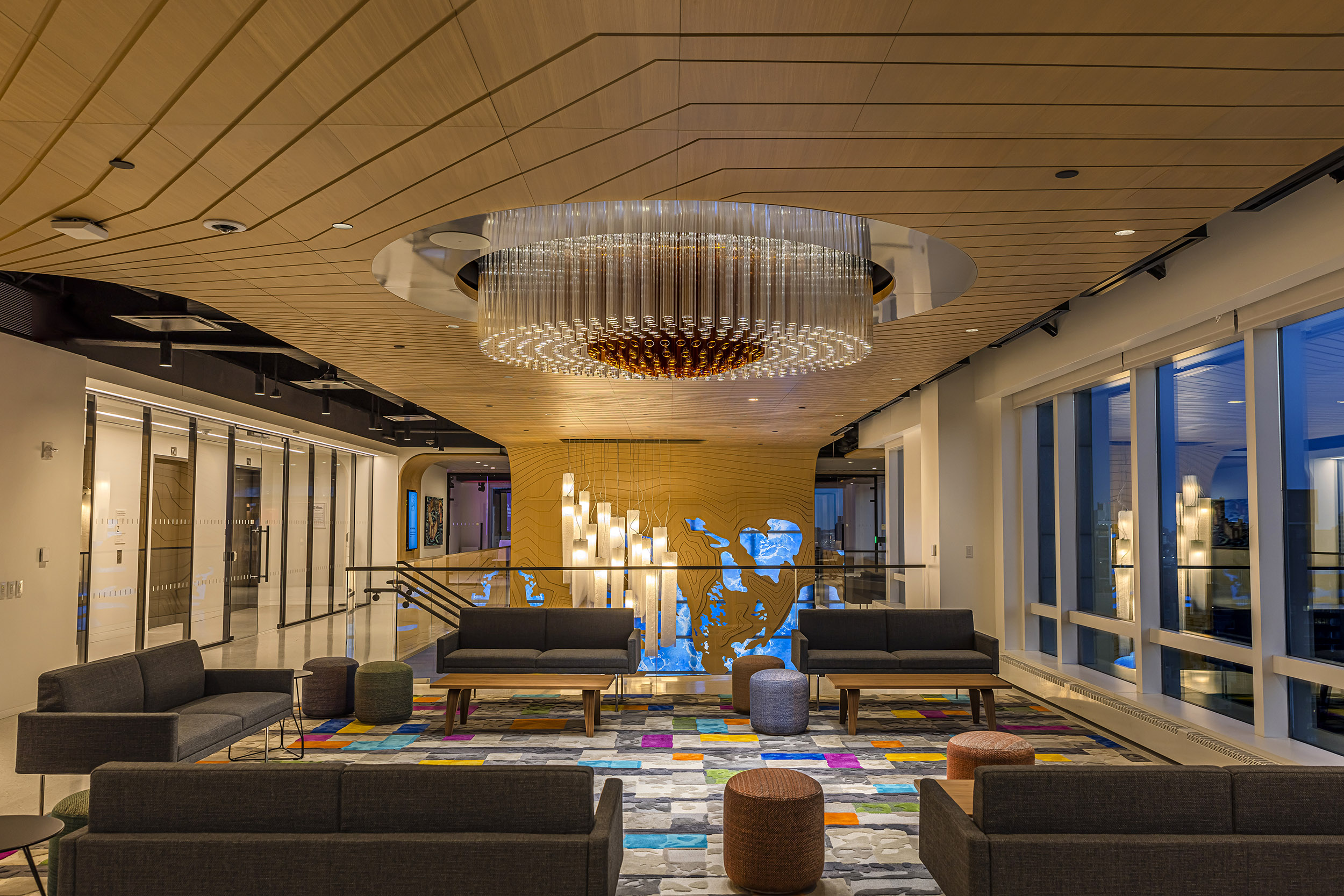
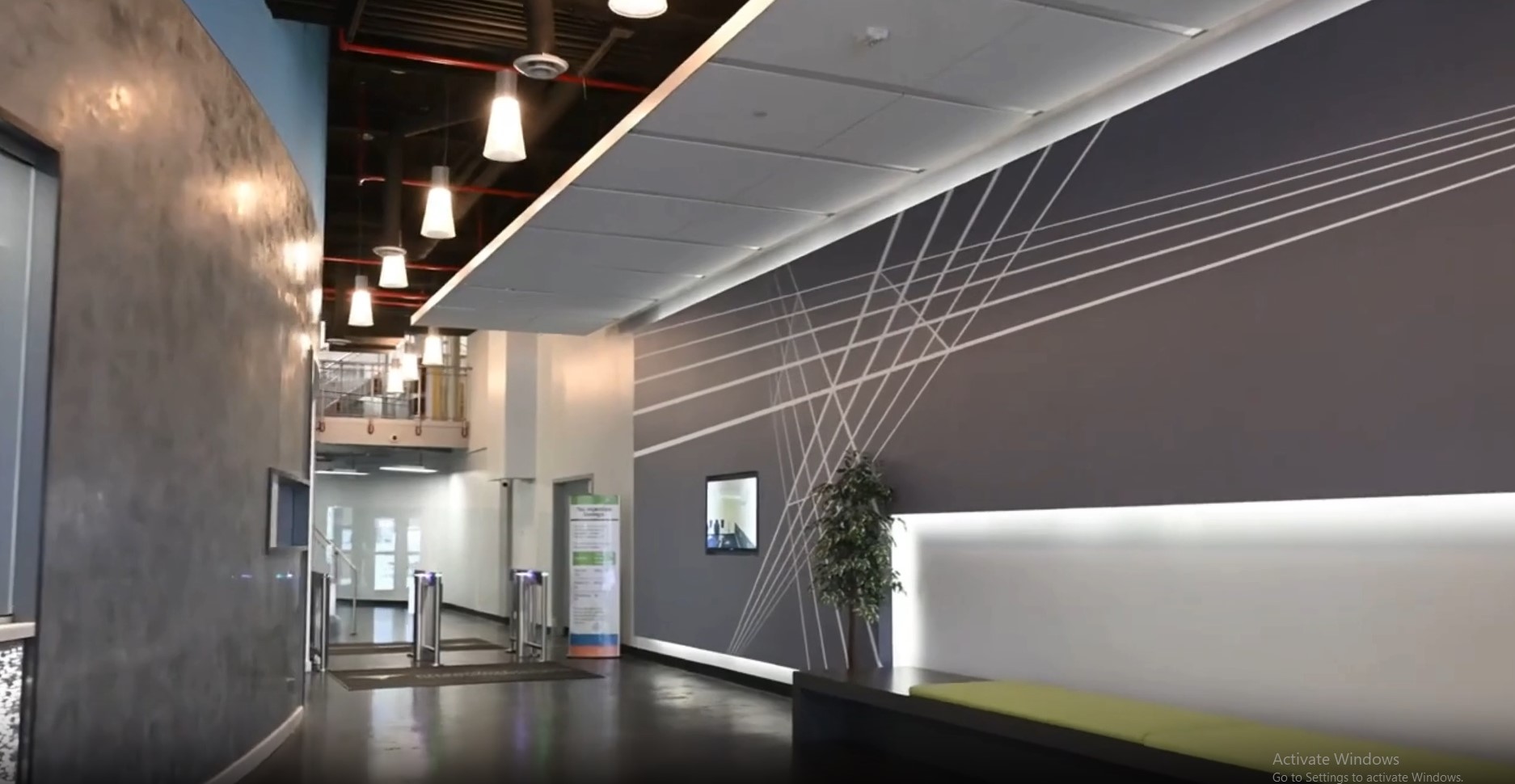
Real buildings, real installations — engineered, submitted, and commissioned with our manufacturer partners.
Reach out to our team
Send us a message and our team will reach out
Let's talk Bryter spaces